 Merken
 The first time I made crème brûlée, I was convinced I'd need some secret French technique I hadn't discovered yet. But standing in my kitchen with just cream, eggs, and sugar, I realized the magic wasn't hidden—it was in the simplicity itself. That satisfying crack of the caramelized top under my spoon became the moment I understood why this dessert has stayed elegant and unchanged for centuries.
I made this for my sister's birthday dinner on a rainy October evening, and I remember being oddly nervous about something so simple. But when everyone's spoons hit that crackling sugar layer in unison, the room went quiet in that perfect way—the kind of moment that makes you feel like you've done something right.
Ingredients
- Heavy cream (2 cups): This is your custard's foundation, and using the real stuff makes all the difference—the richness is what makes people close their eyes when they taste it.
- Egg yolks (4 large): They transform from golden liquid into silky custard, so make sure they're fresh and at room temperature for smooth whisking.
- Granulated sugar (1/2 cup for custard, 4 tablespoons for topping): The first amount sweetens and slightly thickens the custard, while the topping sugar becomes that irresistible caramelized shell.
Tired of Takeout? 🥡
Get 10 meals you can make faster than delivery arrives. Seriously.
One email. No spam. Unsubscribe anytime.
Instructions
- Heat the cream gently:
- Pour cream into a saucepan and warm it over medium heat until you see wisps of steam rising—this takes about 5 minutes. You're not making soup here; just heat it enough to cook the eggs safely without curdling them.
- Whisk eggs and sugar into submission:
- In your bowl, whisk the egg yolks with 1/2 cup sugar until the mixture turns pale and ribbony, about 2–3 minutes. This is your insurance against scrambled eggs; the whisking incorporates air and helps emulsify the cream.
- Temper the eggs slowly:
- This is the moment that makes people nervous, but it's just patience—pour the warm cream into the eggs in a thin stream while whisking constantly. Go slow, whisking the whole time, and nothing bad will happen.
- Strain for silk:
- Push the mixture through a fine sieve into a measuring cup. This removes any tiny cooked bits and gives you that impossibly smooth custard texture that makes people think you're a professional.
- Fill and set up the water bath:
- Divide custard among four ramekins and nestle them in a deep baking dish. Pour hot water around them until it reaches halfway up their sides—this gentle, moist heat bakes the custards perfectly even.
- Bake until just set:
- Slide into a 325°F oven for 30–35 minutes. You're looking for custards that jiggle slightly in the very center when you gently shake the ramekin—they'll continue cooking a bit as they cool, so don't overbake.
- Chill thoroughly:
- Remove ramekins from the water bath once they've cooled to room temperature, then refrigerate for at least 1 hour or up to 2 days. Cold custard is non-negotiable here.
- Torch the sugar crust:
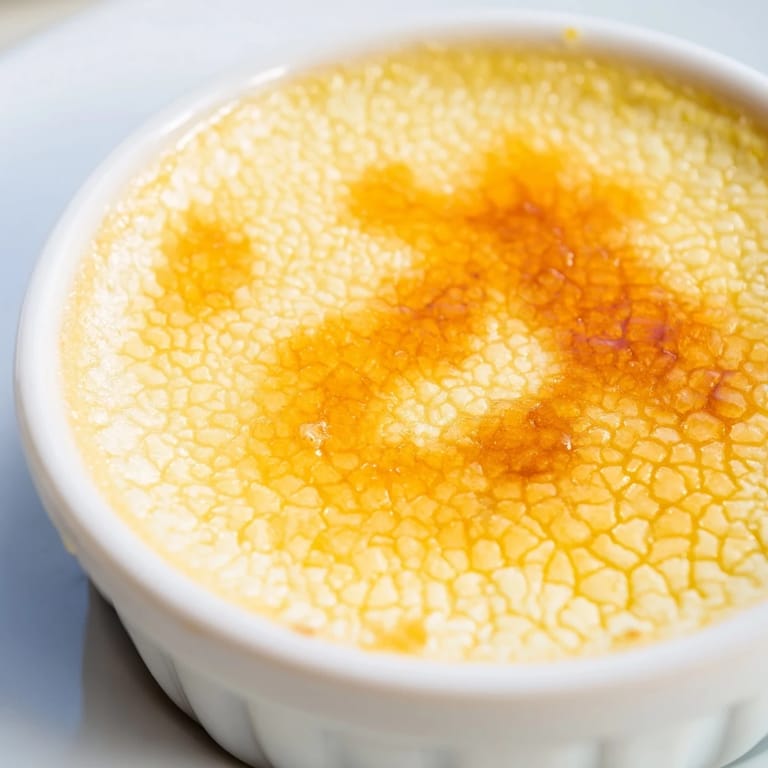
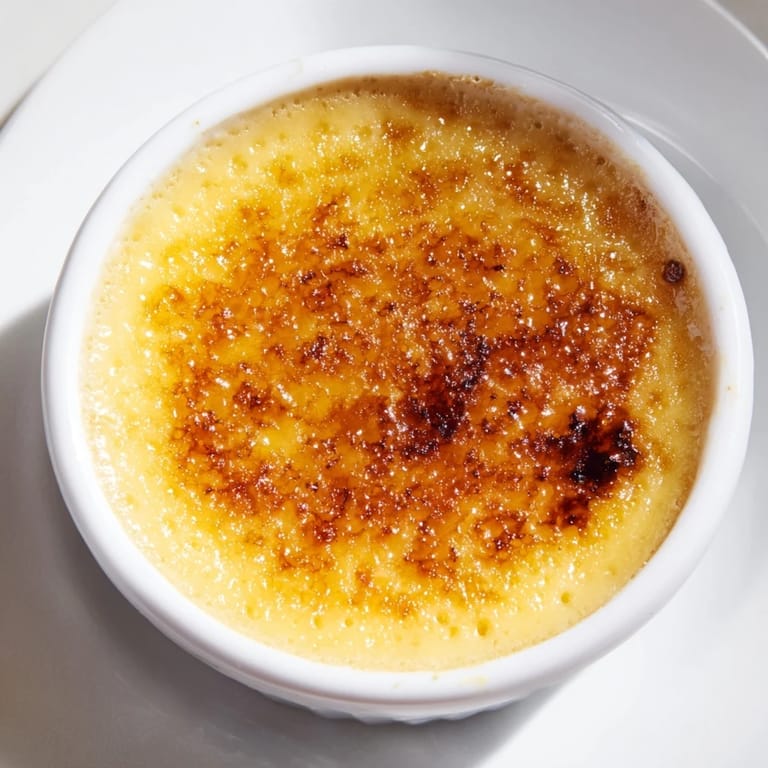
- Just before serving, sprinkle 1 tablespoon sugar evenly over each chilled custard. With a kitchen torch held about 2 inches away, move it in small circles until the sugar melts and turns deep golden brown—listen for the sizzle and watch the color shift.
- Let it harden:
- Wait 1–2 minutes before serving so the caramel sets into that satisfying crackle.
 Merken
 Years later, I still remember my cousin asking if there was a secret ingredient—she was convinced something so creamy and perfect couldn't come from just cream and eggs. I let her think it was magic.
Why This Dessert Feels Fancy But Isn't
Crème brûlée has a reputation for being tricky, but that reputation comes from restaurants, not from reality. The technique is straightforward: warm cream, whisk in eggs, bake gently, chill, caramelize. There's no tempering of chocolate, no folding of meringue, no ticking clock of yeast. It's mostly just waiting, which honestly makes it one of the smartest dinner party moves because you do everything ahead and finish with a 30-second torch moment that looks incredible.
The Joy of Simple Ingredients
I've learned that when you have so few ingredients, each one has to pull its weight. The cream needs to be rich and fresh, the eggs need to be good, and the sugar needs to be plain and granulated. There's nowhere to hide, but that's also the point—simplicity forces quality. It's taught me that sometimes the most elegant dishes aren't the ones with the longest ingredient list; they're the ones where every single thing matters.
Serving and Variations
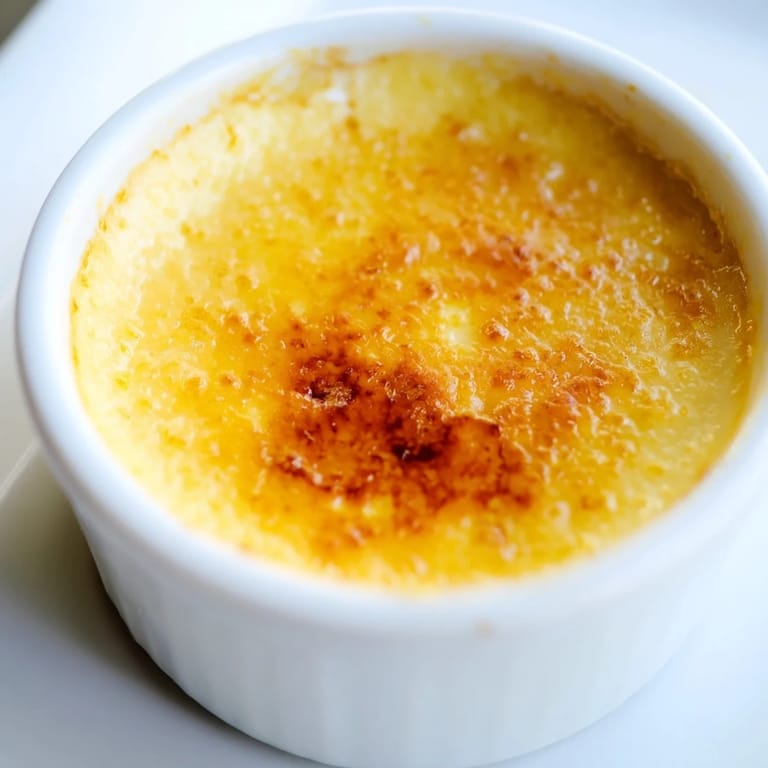
Serve these cold and freshly torched, ideally within a few minutes of caramelizing so the contrast between the crackling top and the cold custard is at its peak. A few raspberries or a mint leaf on top adds color and a light contrast. You can also infuse the cream with vanilla bean, almond extract, or even citrus zest before heating—just let the flavoring steep in the warm cream for 10 minutes, then strain before mixing with eggs.
- Fresh berries alongside add brightness and keep the dessert from feeling too heavy.
- A tiny pour of liqueur like Grand Marnier or Kahlúa into the custard before baking transforms it into a grown-up version.
- Make these up to two days ahead, and torch them just before serving for maximum crunch and drama.
 Merken
 This three-ingredient miracle taught me that good food doesn't need to be complicated, just thoughtful. It's a reminder that sometimes the most memorable meals come from knowing when to stop adding and trust what you have.
Fragen & Antworten zum Rezept
- → Wie gelingt die perfekte Zuckerkruste?
Streue Zucker gleichmäßig auf die Oberfläche und karamellisiere ihn mit einem Küchenbrenner oder unter dem Grill für eine goldbraune, knackige Kruste.
- → Warum wird Crème Brûlée im Wasserbad gebacken?
Das Wasserbad sorgt für gleichmäßige, sanfte Hitze, wodurch der Pudding cremig bleibt und nicht gerinnt.
- → Kann die Sahne mit Vanille aromatisiert werden?
Ja, durch das Erwärmen der Sahne mit Vanilleschote oder Vanilleextrakt erhält der Pudding ein intensiveres Aroma.
- → Wie lange sollte die Crème Brûlée kühlen?
Mindestens eine Stunde im Kühlschrank, besser zwei, damit der Pudding fest wird und das Aroma sich entfaltet.
- → Welche Alternativen gibt es zum Küchenbrenner?
Der Zucker kann unter dem Grill karamellisiert werden, dabei den Prozess aufmerksam beobachten, um Verbrennungen zu vermeiden.