 Merken
 I was helping a friend prepare for her engagement party when she pulled out this gorgeous pomegranate and said, "I want something that looks like it belongs in a magazine." That's when it clicked—why not build the whole platter around it, letting the color naturally tell a story from deep crimson to pale blush? Two hours later, watching guests gasp as they walked into the room, I realized this wasn't just fruit arranged on a plate. It was art you could eat, and honestly, it changed how I think about appetizers.
My sister texted a photo to her book club and three of them asked for the recipe that week. What surprised me most wasn't the compliments about how it looked, but how people lingered around the platter, picking thoughtfully through the colors like they were choosing from a palette. That's when I knew this wasn't just food—it was an experience.
Ingredients
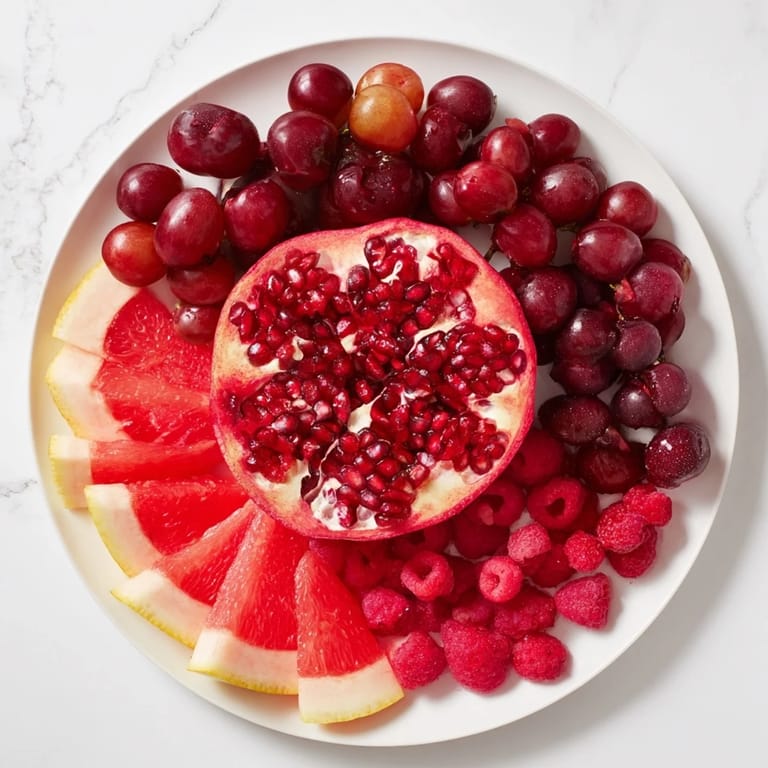
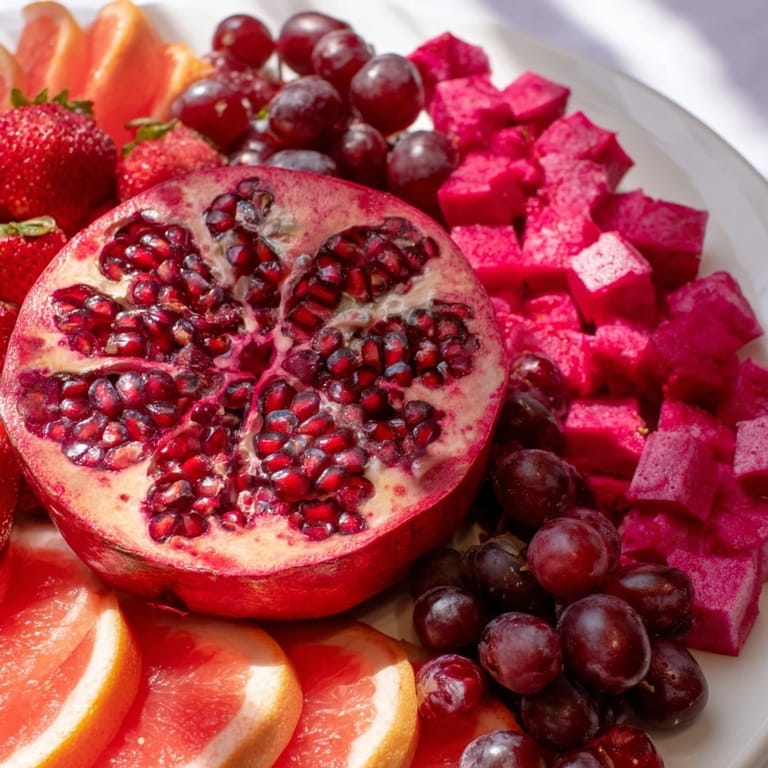
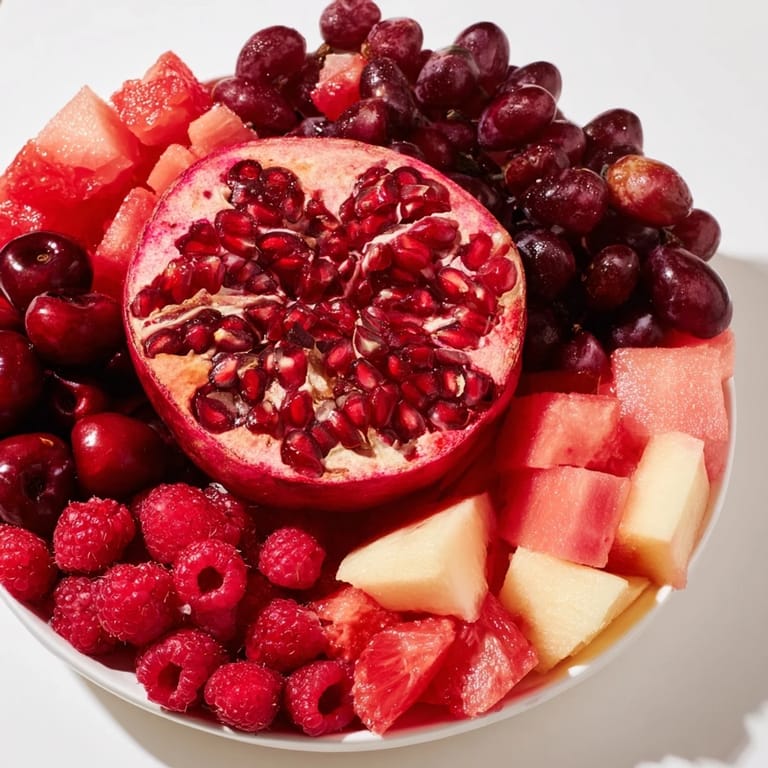
- 1 large pomegranate, halved: This is your showstopper centerpiece, so choose one with thick skin and deep color. The cut side facing up reveals all those jewel-like arils.
- Dark red fruits (1 cup each of dark cherries pitted, red grapes, and strawberries hulled): These form your first ring of color, dramatic and rich, anchoring the whole composition.
- Pink fruits (1 cup each of raspberries, watermelon cubed, and pink grapefruit segments): The gradient lives here—these softer pinks bridge the gap between deep red and pale white.
- Pale pink and white fruits (1 cup each of dragon fruit cubed, apple slices, and pear slices): These create the outer edge, the whisper of color that pulls everything together.
- Fresh mint leaves and edible rose petals (optional): Small touches that add aroma and that final touch of intention, making it clear this was thoughtfully prepared.
Tired of Takeout? 🥡
Get 10 meals you can make faster than delivery arrives. Seriously.
One email. No spam. Unsubscribe anytime.
Instructions
- Set the stage:
- Place your halved pomegranate cut-side up in the absolute center of your serving platter. Take a moment to admire it—this is your anchor, your reason for everything else.
- Start with drama:
- Arrange the deepest red fruits in a crescent around the pomegranate, letting some cherries and grapes actually touch it. This creates an immediate sense of richness and depth that draws the eye.
- Build the gradient:
- Layer the pink fruits next, overlapping slightly so the colors blend visually. You're not being precious about perfect circles—let it feel organic and slightly loose.
- Finish with whispers:
- Place your pale fruits along the outer edge, fading the intensity as you move outward. This is what makes people stop and actually notice the thought behind it.
- The finishing touch:
- Scatter mint leaves and rose petals wherever the mood strikes. Cover and refrigerate until guests arrive, or serve immediately if you love the contrast of cold fruit.
 Merken
 What moved me most was watching my five-year-old nephew choose each fruit with intention, following the color gradient like a path. He didn't just eat it—he understood it, in his own way. That's when I realized we don't cook for function; we cook to create moments where people feel seen.
The Art of Color Arrangement
The secret to making this platter work isn't fancy technique—it's understanding that colors want to flow naturally. When you transition from crimson to blush, you're not being random; you're following the actual language of how our eyes move. Start with your deepest shades near the center and gently lighten as you spiral outward. This isn't about perfection; slight overlaps and casual placements actually make it feel more genuine and less sterile.
Seasonal Swaps and Substitutions
Summer begs for fresh berries and stone fruits, but that doesn't mean winter versions are any less gorgeous. Red currants, lychees, and pomegranate seeds themselves can substitute for cherries if they're not in season. I've used red pears instead of pink apples, and honestly, the platter adapted beautifully. The rule is simple: choose whatever is ripe, bright, and feels abundant in your market right now. That's always going to look and taste better than forcing an ingredient that traveled too far.
Pairing and Serving Ideas
This platter lives best alongside something cold and slightly fizzy—a chilled sparkling rosé is the obvious choice, but white wine, elderflower cordial, or even sparkling water with fresh mint works beautifully. I've found that people naturally linger longer around this kind of fruit arrangement, so give yourself permission to set it out early and let it be part of the party atmosphere rather than just the opening act. The stunning presentation does half the work of making your gathering feel elevated and intentional.
- A light drizzle of lime juice right before serving keeps apples and pears from browning and adds a bright note.
- If you're making this hours ahead, cover it loosely with plastic wrap and refrigerate—cold fruit is crisper and more refreshing.
- Don't stress about fruit being perfectly uniform; slight variations in size actually add visual interest and feel more real.
 Merken
 At its heart, this platter is permission to slow down and notice beauty in the most simple things. Every time you make it, you're saying to the people around you: you matter enough for thoughtfulness.
Fragen & Antworten zum Rezept
- → Wie arrangiert man die Früchte am besten?
Beginnen Sie mit dem halben Granatapfel in der Mitte. Ordnen Sie dann die tiefroten Früchte in einem Halbmond an, gefolgt von den pinken und schließlich den blassen Früchten für einen sanften Farbverlauf.
- → Welche Früchte eignen sich als Ersatz?
Sie können rote Johannisbeeren, Granatapfelkerne, Litschis oder Pfirsiche verwenden, je nach saisonalem Angebot.
- → Wie verhindert man das Braunwerden von Apfel- und Birnenscheiben?
Ein leichter Spritzer Limettensaft verhindert Oxidation und erhält die frische Farbe der Früchte.
- → Welche Garnituren passen gut zu dieser Platte?
Frische Minzblätter und essbare Rosenblätter unterstreichen die Frische und sorgen für attraktive Farbakzente.
- → Wie lange kann die Platte vorbereitet werden?
Die Platte sollte idealerweise kurz vor dem Servieren angerichtet werden, kann aber abgedeckt auch bis zu mehreren Stunden im Kühlschrank aufbewahrt werden.
- → Ist diese Platte für spezielle Ernährungsweisen geeignet?
Ja, sie ist vegan und glutenfrei, somit für verschiedene Ernährungsbedürfnisse geeignet.