 Merken
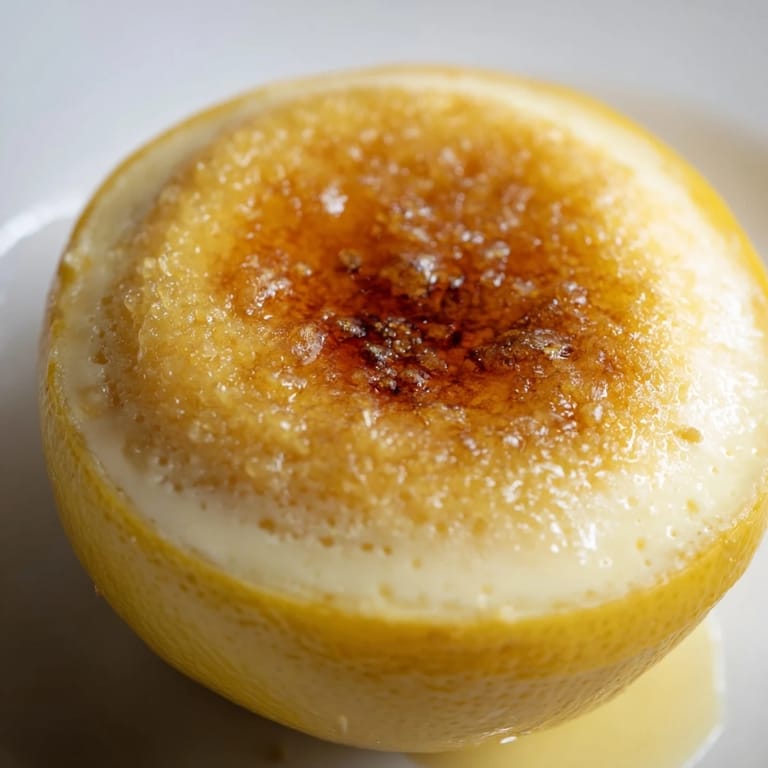
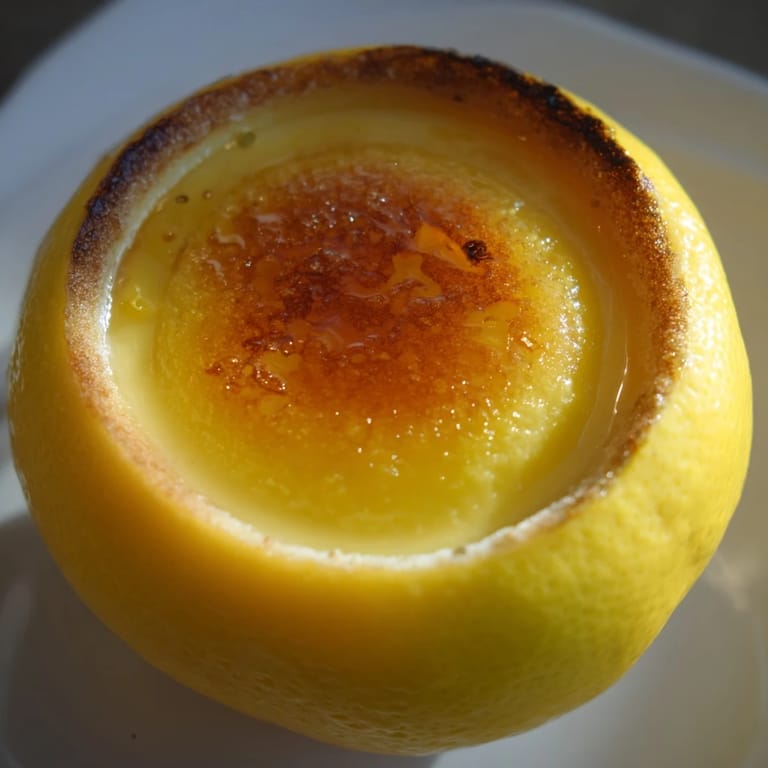
 I discovered posset while flipping through an old cookbook at a farmers' market, and something about the idea of serving cream in a hollowed lemon shell felt like pure magic. The first time I made it, my hands were shaking slightly as I torched the sugar top, half convinced I'd ruin this elegant little dessert. But that crack of caramelized sugar giving way to silky lemon cream? That moment made me understand why this British classic has survived centuries.
I made these for my parents' anniversary dinner, and watching my mum's face when she picked up that lemon shell and realized it was edible was worth every careful minute of preparation. My dad, who usually just nods politely at desserts, actually went quiet for a moment, which meant everything.
Ingredients
- Double cream (500 ml): Use proper double cream if you can find it, as the higher fat content gives that signature silky texture—American heavy cream works just as well and creates that luxurious mouthfeel.
- Caster sugar (140 g for base, plus 6-8 tsp for topping): The fine crystals dissolve quickly and smoothly into the cream, and I learned the hard way that regular granulated sugar can feel slightly grainy against your tongue.
- Lemon zest (from 2 lemons): Zest these before juicing so you capture all those fragrant oils on the surface, and don't press the zester too hard or you'll get bitter white pith mixed in.
- Fresh lemon juice (90 ml): This is what makes the whole thing sing, so squeeze your lemons by hand and taste as you go—some are more tart than others, and that matters here.
- Large lemons (6 for shells): Pick ones that feel heavy for their size and have thin, unblemished skin that'll look beautiful when served.
Tired of Takeout? 🥡
Get 10 meals you can make faster than delivery arrives. Seriously.
One email. No spam. Unsubscribe anytime.
Instructions
- Prep your beautiful vessels:
- Halve your lemons lengthwise and carefully scoop out the flesh with a small spoon or melon baller, keeping those shells as intact as possible—they're going to cradle something special. Trim a thin slice off the bottom of each so they sit steady and upright on the plate.
- Heat the cream until it sings:
- Combine cream, sugar, and lemon zest in a medium saucepan over medium heat, stirring gently until every grain of sugar has dissolved. Bring it to a gentle boil—you'll notice the surface starting to move and shimmer—then let it bubble softly for exactly 3 minutes before taking it off the heat.
- Add the lemon juice and watch it transform:
- Pour in that fresh lemon juice slowly and stir; you'll see the mixture thicken and develop this gorgeous pale yellow color as the acid works its magic. Let it cool for about 10 minutes, then strain out the zest pieces for a silky-smooth final texture.
- Fill your lemon shells with care:
- Pour the warm posset into each shell, filling almost to the rim but leaving just a tiny bit of space for the caramelized sugar crown you're about to add. Handle them gently because they're still a bit delicate at this point.
- Let them set in the quiet cold:
- Slide them into the fridge and give them at least 3 hours to firm up completely—overnight is even better because the flavors deepen and the texture becomes almost velvety.
- Finish with that satisfying crack:
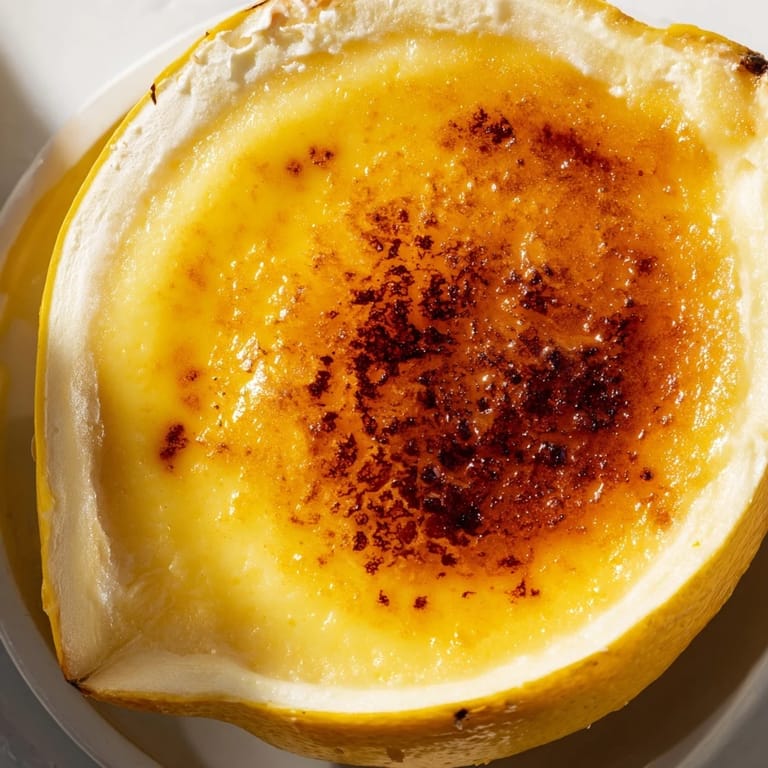
- Just before serving, sprinkle about 1 teaspoon of caster sugar evenly across the top of each posset, then use your blowtorch to caramelize it into that thin, amber, crackling shell. Let it sit for 2-3 minutes to harden completely before anyone breaks into it.
 Merken
 There's something almost theatrical about presenting these at the table, and I realized that food doesn't have to be complicated to feel like an occasion. These little lemon shells make people slow down and actually taste something.
The Art of the Brûlée Top
The caramelized sugar layer is where this dessert gets its personality and that satisfying textural contrast. I've found that evening out the sugar distribution is crucial—if it's lumpy, some bits will burn while others stay pale. The blowtorch gives you the most control, but if you don't have one, a very hot grill or broiler will work if you watch it like a hawk and don't look away for even a second.
Making It Ahead (and Why You Should)
The beauty of this dessert is that you can prepare it completely up to a full day in advance, leaving just the torch work for the moment before serving. I actually think the flavors settle and deepen when they have time to rest together in the fridge. The only thing you absolutely must do fresh is that caramelized top, because sugar hardens quickly and will turn sticky and soft if it sits around.
Flavor Adventures and Final Details
Once you've mastered the basic version, this recipe opens up to lovely experiments. I've infused the cream with thyme and basil by dropping a sprig into the simmering mixture and fishing it out before adding the lemon juice—it adds a whisper of something herbaceous that makes people pause and ask what that subtle note is.
- Serve alongside crisp shortbread or almond biscuits for textural contrast and a little something to sip the posset with.
- If you can't find double cream, heavy cream works perfectly fine and gives almost identical results.
- These are genuinely showstopping, so don't be shy about making them for people you want to impress.
 Merken
 This is the kind of dessert that makes people remember the meal, not just because it tastes extraordinary, but because it arrives looking like edible art. Make it for someone you want to impress, or make it for yourself on a quiet evening when you deserve something that feels utterly luxurious.
Fragen & Antworten zum Rezept
- → Wie lange sollte der Zitronenposset gekühlt werden?
Mindestens drei Stunden im Kühlschrank, damit die Masse richtig fest wird und die Aromen sich verbinden.
- → Kann das Dessert im Voraus zubereitet werden?
Ja, der Posset kann bis zu einem Tag vorher vorbereitet werden. Das Karamell sollte jedoch erst kurz vor dem Servieren hergestellt werden.
- → Wie karamellisiert man den Zucker am besten?
Mit einem Küchenbrenner lässt sich der Zucker gleichmäßig und schnell karamellisieren. Alternativ kann der Grill genutzt werden, dabei genau beobachten.
- → Kann man aromatische Kräuter hinzufügen?
Ja, eine Prise Thymian oder Basilikum in der Sahne gibt dem Posset eine feine Geschmacksnote, sollte aber vor Zugabe des Zitronensafts entfernt werden.
- → Wie behält man die Zitronenschalen beim Servieren stabil?
Die Zitronenhälften unten vorsichtig flach schneiden, damit sie beim Servieren aufrecht stehen.